


Who Is Joyce Indig? Everything You Need to Know Today
Intro
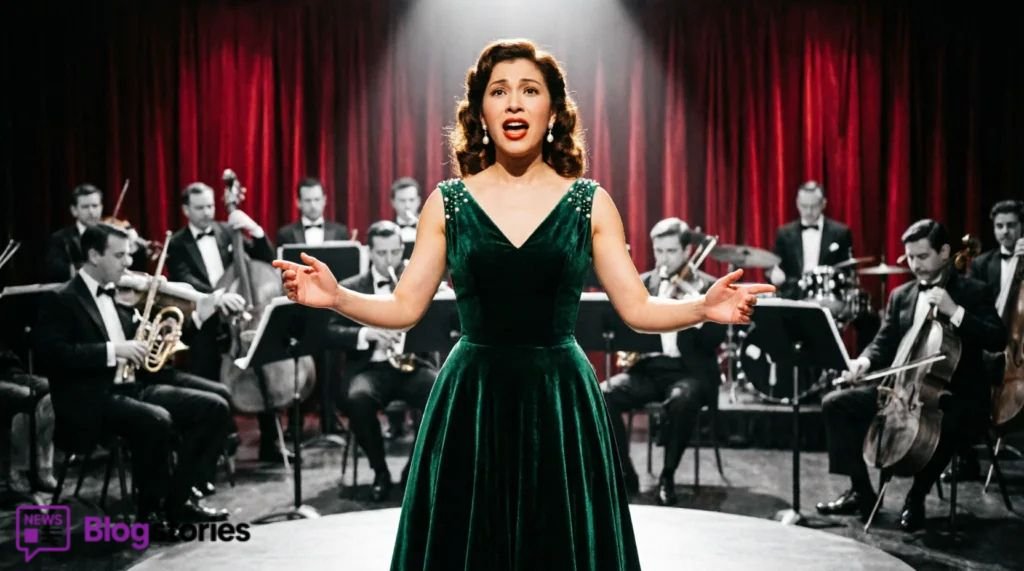
Joyce Indig was an American singer associated with the popular-music scene of the late 1940s and early 1950s. She appeared on early television, recorded several songs during the 78-rpm era, and later became widely known as the first wife of comedian and actor Rodney Dangerfield.
Although her marriage to Dangerfield explains much of the modern interest in her name, Joyce had her own professional identity before her family became connected to his rise in comedy. Surviving record listings, entertainment publications, television credits, and vintage recordings show that she was actively pursuing a singing career at a time when television was still new and American popular music was undergoing major change.
At the same time, Joyce Indig was never documented as extensively as the major stars of her era. Many details about her education, childhood, personal interests, and later years remain private or difficult to verify. This makes it important to avoid repeating unsupported claims and to focus on what the surviving evidence genuinely tells us.
BIO
| Label | Information |
|---|---|
| Full Name | Joyce Indig |
| Also Known As | Joyce E. Indig Roy |
| Profession | Singer and Television Performer |
| Nationality | American |
| Known For | Early music career and marriage to Rodney Dangerfield |
| Active Years | Late 1940s to Early 1950s |
| Television Appearance | The Art Ford Show |
| Music Style | Traditional Pop and Vocal Music |
| Record Labels | Mercury Records and London Records |
| Spouse | Rodney Dangerfield (married twice) |
| Children | Brian Roy and Melanie Roy |
| Legacy | Remembered for her music career and place in American entertainment history |
Who Was Joyce Indig?
Joyce Indig was a vocalist who performed professionally around the beginning of the 1950s. She is connected to several commercial recordings and is credited as appearing as herself on The Art Ford Show, a New York television program that aired during 1949 and 1950.
Her work places her within the traditional pop era that came immediately before rock and roll transformed the American music industry. Singers of that period commonly performed with orchestras, vocal groups, and conductors rather than modern self-contained bands.
Joyce’s recordings followed that pattern. The surviving examples feature carefully arranged orchestral accompaniment and polished vocal performances designed for radio, television, and home record players.
Today, however, her name is frequently introduced through biographies of Rodney Dangerfield. Major accounts describe Joyce as a singer and identify her as the woman he married before he achieved national fame under the Dangerfield name.
That description is accurate but incomplete. She should not be viewed only as a famous comedian’s former wife. Her television appearance and surviving recordings show that she had already entered professional entertainment in her own right.
Her Early Background
Publicly accessible biographical information about Joyce Indig’s childhood is limited. A memorial record identifies her as Joyce E. Indig Roy and gives her life dates as 1927 to 1977. It also states that she was the elder of two daughters born to Rhea and Max Indig. Because this information comes from a user-contributed memorial rather than a complete institutional biography, it should be treated carefully, even though it is consistent with other available references.
Reliable public sources do not provide a detailed account of her education, vocal training, childhood ambitions, or the precise route by which she entered entertainment.
It is reasonable to conclude that she developed sufficient ability and professional confidence to appear on television and record commercially, but it would be misleading to invent a dramatic discovery story or claim specific training without evidence.
This absence of information is not unusual. Many singers who worked during the 1940s and 1950s appeared on regional programs, recorded a small number of singles, and then largely disappeared from public entertainment coverage. Their careers were preserved through record labels and trade publications rather than extensive interviews or biographies.
Her Television Debut
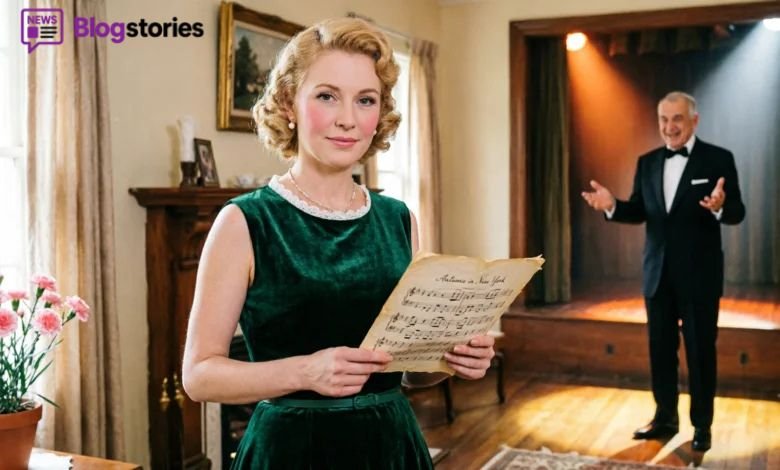
One of the clearest records of Joyce Indig’s early work is her association with The Art Ford Show. Screen-credit databases list her as appearing as herself on the series, which ran from 1949 to 1950.
Art Ford was a radio and television personality who presented musical performers and other guests. Programs of this kind were especially significant during television’s early development because they brought nightclub-style entertainment into American homes.
A surviving biographical account describes Joyce’s appearance on the program as her professional singing debut. While the exact date and complete footage are not readily available, the television credit supports the conclusion that this appearance formed part of her entry into professional entertainment.
Appearing on a live or early recorded television program required more than simply having a pleasant voice. Performers needed strong timing, confidence, and the ability to work with studio musicians under demanding technical conditions.
Television production was far less flexible than it is today. There was limited opportunity to correct mistakes, and performers often had to deliver songs in a single continuous presentation. Joyce’s participation therefore indicates that professionals considered her suitable for a serious broadcast setting.
Joyce Indig’s Recording Career
Joyce Indig’s recording activity appears to have been concentrated around 1950. Surviving records and trade-publication references connect her to several songs released during that year.
Among the best-documented recordings are “Wish Me Luck,” “I’ll Never Be Free,” “The Black Rose,” “Ev’rybody Clap Hands,” and “The Best Thing for You.” These titles reflect the mixture of theatrical songs, romantic popular music, and jazz-influenced material common during the period.
“Wish Me Luck” was connected to the Broadway production Touch and Go, with music by Jay Gorney and lyrics by Jean and Walter Kerr. A surviving copy identifies orchestra leader Jack Pleis as the conductor.
“The Best Thing for You” was written by Irving Berlin and appeared in the musical Call Me Madam. Joyce’s version used an orchestral arrangement, demonstrating her connection to the polished theatrical-pop style of the era.
Another known release paired “The Black Rose” with “Ev’rybody Clap Hands.” A 1950 Billboard publication mentioned both songs under Joyce’s name and identified Harry Geller as the conductor.
A surviving Mercury Records promotional disc lists the pair as a 10-inch, 78-rpm release with the catalog number 5509. Such promotional copies were normally distributed to radio stations, reviewers, and industry professionals rather than marketed only through ordinary retail channels.
These recordings establish Joyce as more than an occasional amateur performer. She was working with recognized songs, professional orchestras, conductors, and established record labels.
A Voice From the 78-RPM Era
Understanding Joyce Indig’s career requires understanding the music industry of 1950. Albums had not yet become the dominant format they would later be. Individual songs were commonly released on heavy shellac discs rotating at 78 revolutions per minute.
A singer could receive meaningful radio exposure without releasing a full album. Careers were often built one single at a time, and performers regularly recorded songs that were also being interpreted by competing vocalists.
Trade publications sometimes listed numerous versions of the same composition. For example, a November 1950 issue of The Cash Box included Joyce Indig’s London-label recording of “I’ll Never Be Free” alongside recordings by artists including Kay Starr, Tennessee Ernie Ford, Ella Fitzgerald, Louis Jordan, Dinah Washington, and others.
This does not mean Joyce achieved the same level of commercial fame as those performers. It does show, however, that her recording circulated within the same competitive popular-music market.
Her voice belonged to a period when singers were expected to interpret songs with clarity and emotional control. The star was not always the songwriter. Instead, a vocalist’s value often came from the ability to give an established composition a distinctive mood and personality.
Marriage to Rodney Dangerfield
Joyce Indig’s personal life became connected to entertainment history through her marriage to Rodney Dangerfield, who was still known professionally and legally as Jack Roy during much of their early relationship.
Sources disagree about the exact year of their first marriage. Some biographies report 1949, while others give October 3, 1951. Sources also vary slightly on whether their first divorce occurred in 1961 or 1962. They generally agree that Joyce and Rodney married twice, remarried in 1963, and ended their second marriage in 1970.
Because of those inconsistencies, the safest conclusion is that the couple first married around the beginning of the 1950s, divorced in the early 1960s, remarried in 1963, and divorced permanently in 1970.
Their relationship took place during a difficult period in Dangerfield’s career. He had begun performing comedy while young but struggled to build a dependable income. After marrying Joyce, he temporarily stepped away from regular stand-up work and entered the aluminum-siding business while helping support the family. His official biographical site confirms that he was still far from success when he married singer Joyce Indig.
Later accounts often present this period as a simple chapter in Dangerfield’s comeback story. From Joyce’s point of view, however, it was a long period of family responsibility, financial uncertainty, marital instability, and changing professional ambitions.
Their Children and Family Life
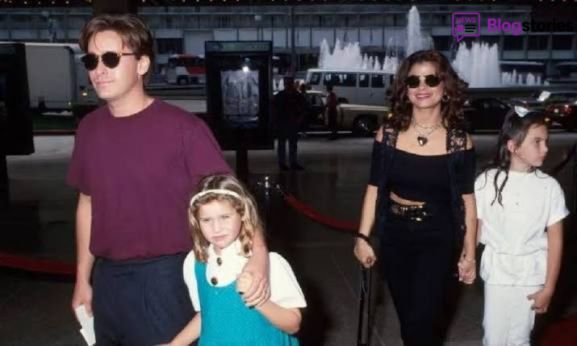
Joyce Indig and Rodney Dangerfield had two children, a son named Brian and a daughter named Melanie. Multiple biographies agree on their names, although some online references contain contradictory birth-year information.
The family lived for a time in New Jersey while Dangerfield worked outside show business. His eventual return to comedy began gradually, with daytime business responsibilities and evening performances.
Joyce’s own music career does not appear to have continued at the same visible level after the early 1950s. The limited public record does not provide a definitive explanation. Marriage, motherhood, changing musical trends, and the practical demands of family life may all have contributed, but no single reason should be stated as fact without stronger evidence.
The marriage was reportedly troubled, and the couple spent periods apart. Their second divorce in 1970 brought their marital relationship to a final end.
Joyce largely disappeared from mainstream entertainment coverage afterward. Unlike Dangerfield, who became increasingly famous during the 1970s and 1980s, she did not build a highly public television or film career.
Rodney Dangerfield’s Later Fame
Rodney Dangerfield developed the self-deprecating comic identity that eventually made him famous after his early marriage had already experienced years of difficulty.
His signature theme was that he received “no respect.” His rapid one-liners, anxious physical mannerisms, dark suit, and loosened red tie became instantly recognizable. He later appeared frequently on television and starred in successful films such as Caddyshack, Easy Money, and Back to School.
Because Dangerfield’s greatest fame came after his relationship with Joyce had ended, many later fans encountered her name only when reading about his earlier life.
That has created an unusual imbalance. Dangerfield’s professional development is documented in books, interviews, television appearances, and official biographies. Joyce’s life is represented by only a small collection of credits, recordings, family references, and archival notices.
As a result, articles sometimes fill the gaps with vague or invented claims. A responsible biography should resist that temptation. Limited documentation does not mean that her life lacked substance. It means that much of it was not preserved for public study.
Her Death
Joyce Indig is generally identified in memorial records as having died in 1977 at approximately 49 or 50 years of age. A biographical reference concerning her son also states that she died when Brian was 17, which broadly supports the 1977 date when compared with sources placing his birth in 1960.
Publicly accessible, dependable sources do not clearly document the cause or exact circumstances of her death. Claims about those details should therefore be treated with caution unless supported by official records or reputable contemporary reporting.
Her death occurred several years before Dangerfield reached the height of his film career. By the time audiences embraced him in major 1980s comedies, Joyce was no longer alive to witness that stage of his success.
Why People Search for Joyce Indig
Interest in Joyce Indig comes from several different groups. Fans of Rodney Dangerfield want to understand his life before fame, while collectors of vintage recordings encounter her name on old Mercury and London records.
Researchers interested in early television may also find her through The Art Ford Show. Others discover one of her recordings online and wonder why such a capable singer left behind so little easily available biographical information.
Her story also reflects a wider issue in entertainment history. Countless performers contributed to radio, television, popular music, and live entertainment without becoming permanent household names.
Their work may survive on a fragile record, in a trade advertisement, or in a brief cast listing. Recovering those details helps create a fuller picture of cultural history—one that includes not only the biggest celebrities but also the working performers surrounding them.
Her Lasting Significance
Joyce Indig’s surviving body of work is small, but it is historically meaningful. Her recordings preserve the sound of postwar American popular music, when Broadway melodies, orchestral arrangements, jazz phrasing, and traditional vocal performance regularly overlapped.
She also represents women whose professional stories became overshadowed by the later fame of their husbands. Referring to her only as Rodney Dangerfield’s first wife misses the fact that she appeared on television and recorded music before his national breakthrough.
Her career may not have lasted long enough to produce a large discography, but the evidence that remains reveals genuine professional activity.
Songs such as “Wish Me Luck” and “The Black Rose” allow modern listeners to hear her rather than merely read her name in someone else’s biography. That distinction matters. A recording restores individuality in a way that a brief family reference cannot.
Facts and Uncertainties
Several facts about Joyce Indig are strongly supported. She was a professional singer, appeared on The Art Ford Show, made commercial recordings around 1950, married Rodney Dangerfield twice, and had two children with him.
Other details remain uncertain. Published sources disagree over the exact date of her first marriage and first divorce. Full information about her education, vocal training, later employment, private relationships, and cause of death is not readily available.
Readers should therefore be skeptical of websites that present long, detailed accounts without identifying where those details originated.
A careful biography does not need to pretend that every question has been answered. In Joyce Indig’s case, acknowledging the gaps creates a more honest and respectful portrait.
Final Thoughts
Joyce Indig was an early-television performer and recording vocalist whose career deserves recognition beyond her marriage to Rodney Dangerfield.
Her known recordings place her within the sophisticated orchestral-pop tradition of 1950. Her appearance on The Art Ford Show connects her to the formative years of American television. Her personal life, meanwhile, became part of the complicated early story of one of America’s most recognizable comedians.
Much about her remains undocumented, but enough evidence survives to correct the idea that she was simply a private figure connected to a celebrity. Joyce had her own voice, her own professional opportunities, and her own place in the entertainment culture of her time.
Today, vintage recordings and archival references are helping listeners rediscover that voice. While her full story may never be completely reconstructed, the surviving material gives Joyce Indig a clearer and more deserved identity: a talented singer whose brief recorded career remains part of mid-century American music history.
FAQs
1. Who was Joyce Indig?
Joyce Indig was an American singer active during the late 1940s and early 1950s. She is also known as the first wife of comedian Rodney Dangerfield and appeared on early television while recording several popular songs.
2. Why is Joyce Indig still remembered today?
People continue searching for Joyce Indig because of her connection to Rodney Dangerfield and growing interest in forgotten entertainers from the golden era of American music and television.
3. Did Joyce Indig have a music career?
Yes. Joyce Indig recorded several songs and performed on television during the early years of her career. Her work reflected the traditional pop style that was popular before the rise of rock and roll.
4. Did Joyce Indig and Rodney Dangerfield have children?
Yes. Joyce Indig and Rodney Dangerfield had two children together, a son named Brian and a daughter named Melanie, during their marriage.
5. What makes Joyce Indig’s story unique?
Joyce Indig’s story combines a professional singing career with a fascinating place in entertainment history. Although much of her life remained private, her recordings and television appearances continue to interest music lovers and historians.