




Best Car Dealership With Hearing Loop Services Explained
Buying a car should feel exciting, not stressful. But for customers with hearing loss, a busy showroom, background music, ringing phones, and fast-moving conversations can make the process difficult. A car dealership with hearing loop services helps solve this problem by making communication clearer, more comfortable, and more respectful.
A hearing loop is an assistive listening system that sends sound directly to hearing aids or cochlear implants that have a telecoil, often called a T-coil. This helps reduce background noise and makes speech easier to understand.
BIO
| Label | Information |
|---|---|
| Article Topic | Car Dealership With Hearing Loop |
| Category | Accessibility in Automotive Industry |
| Main Purpose | Improve communication for hearing-impaired customers |
| Technology Used | Hearing loop system |
| Works With | Hearing aids and cochlear implants |
| Key Benefit | Clearer sound and speech understanding |
| Common Locations | Reception, sales desk, finance office |
| Ideal Users | Customers with hearing loss |
| Noise Reduction | Helps reduce background showroom noise |
| Customer Experience | More comfortable and stress-free |
| Accessibility Focus | Inclusive and customer-friendly service |
| Industry Importance | Supports modern accessibility standards |
What Is a Hearing Loop?
A hearing loop is a sound system designed for people who use compatible hearing aids or cochlear implants. Instead of relying only on room speakers or face-to-face speech, the system sends the speaker’s voice directly to the listener’s hearing device.
This can make a major difference in a dealership. Car dealerships are often noisy places. Salespeople talk with customers, phones ring, doors open and close, and service departments can be even louder. A hearing loop helps cut through that noise and gives the customer a cleaner listening experience.
The system usually includes a microphone, an amplifier, and a loop cable installed around a specific area. When someone speaks into the microphone, the sound is transmitted through the loop and picked up by the telecoil inside the hearing aid or cochlear implant.
Why It Matters in a Car Dealership
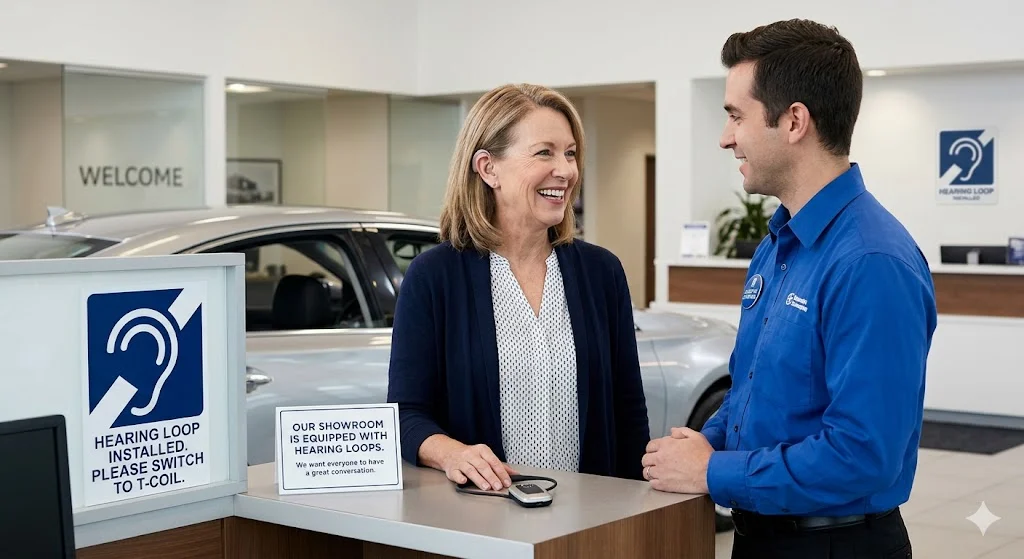
A vehicle purchase involves important conversations. Customers need to understand pricing, warranties, financing, trade-in value, safety features, service plans, and contract terms. Missing even one detail can cause confusion or frustration.
A car dealership with hearing loop services gives customers better access to these conversations. It shows that the dealership is not only focused on selling vehicles, but also on serving people properly.
For many customers, this is more than a convenience. It is about dignity. No one wants to keep asking someone to repeat the same sentence, especially during a major financial decision. Clear communication helps customers feel respected and included.
How Hearing Loop Services Work
In a dealership, hearing loops can be installed in several important areas. The most useful places are reception desks, sales consultation spaces, finance offices, service counters, and customer waiting areas.
At the reception desk, the system helps customers check in, ask questions, and understand directions. At the sales desk, it helps during vehicle comparisons, pricing discussions, and feature explanations. In the finance office, it becomes even more valuable because customers must understand contracts, loan terms, monthly payments, and optional protection plans.
Some dealerships may use fixed hearing loops in permanent spaces, while others may offer portable counter loops for one-on-one conversations. Both can improve accessibility when they are installed and maintained correctly.
The Role of the Telecoil
A telecoil is a small coil inside many hearing aids and cochlear implants. It works like a wireless receiver for hearing loop systems. When the user switches their device to the telecoil setting, they can receive sound from the loop more directly.
Not every hearing aid has a telecoil, but many prescription hearing aids and cochlear implants do. The National Institute on Deafness and Other Communication Disorders explains that hearing loops can connect to public address systems and that portable loop receivers may help people who do not have telecoil-equipped hearing aids.
This is why staff training matters. A dealership should not simply install a hearing loop and assume the job is done. Employees should know how the system works, where it is available, and how to guide customers who ask about it.
Benefits for Customers
The biggest benefit is clearer communication. Hearing loops reduce the effect of background noise and distance, which are two common challenges for people with hearing loss.
Another benefit is confidence. A customer who can clearly hear the salesperson is more likely to ask questions, compare options, and make informed decisions. They do not have to guess what was said or rely on a family member to repeat everything.
A hearing loop also creates a calmer buying experience. Car buying can already feel overwhelming because there are many choices and financial details. Better sound clarity helps reduce pressure and makes the process easier to follow.
Benefits for Dealerships
Accessibility is good customer service. A dealership that invests in hearing loop services sends a clear message: every customer matters.
This can build trust. Customers often remember how they were treated more than the exact details of the sale. If a dealership makes the buying process easier for someone with hearing loss, that customer may be more likely to return for service, recommend the dealership, or leave a positive review.
It can also help staff work more effectively. When communication is clear, there are fewer misunderstandings. Salespeople, finance managers, and service advisors can explain details once instead of repeating information several times.
Accessibility and Legal Awareness
In the United States, the Americans with Disabilities Act protects people with disabilities from discrimination in many areas of public life. ADA.gov describes the ADA as a civil rights law that protects people with disabilities across public settings.
Public accommodations may need to provide effective communication and accessibility support depending on the setting and situation. Assistive listening systems are one part of accessible communication, especially in places where spoken information is important.
Dealerships should not view hearing loops only as a legal concern. The better approach is to see them as part of professional customer care. A dealership that plans for accessibility is more prepared to serve a wider range of buyers.
Where Hearing Loops Help Most
The finance office is one of the most important places for hearing loop support. This is where customers review contracts, interest rates, payment schedules, warranties, and fees. Clear communication here protects both the buyer and the dealership.
The service department is another important area. Customers need to understand repair recommendations, inspection results, estimated costs, and pickup times. A hearing loop can help prevent confusion when discussing technical vehicle issues.
Sales areas also benefit. Customers may ask about trim levels, fuel economy, safety technology, electric vehicle charging, or used car history. These details matter when choosing the right vehicle.
What Makes a Good Hearing Loop Service?
The best system is not just installed. It is properly placed, tested, labeled, and supported by trained staff.
Good signage is important. Customers should be able to recognize that a hearing loop is available. Many public places use the international hearing loop symbol, often showing an ear with a “T.” This helps people know they can switch their hearing device to the telecoil setting.
The system should also be checked regularly. A poorly maintained hearing loop can create frustration instead of solving a problem. Staff should know who is responsible for testing it and what to do if a customer says it is not working.
Staff Training Is Essential
Technology alone cannot create a good experience. Staff attitude matters just as much.
Dealership employees should speak clearly, face the customer when talking, and avoid rushing through important details. They should also know not to shout. Shouting often distorts speech and can feel uncomfortable. A calm, clear voice is usually more helpful.
Staff should also be comfortable asking simple, respectful questions such as, “Would using our hearing loop system help during this conversation?” That small question can make a customer feel welcome rather than singled out.
Signs of a Truly Accessible Dealership
A truly accessible dealership makes hearing support easy to find and easy to use. It does not hide accessibility information or treat it like an afterthought.
Look for clear signs at reception, sales desks, service counters, and finance offices. Check whether staff can explain where the hearing loop works. A strong dealership will be able to answer without confusion.
It is also helpful when accessibility information appears on the dealership website. Customers with hearing loss may want to plan ahead before visiting. Clear online information can reduce anxiety and help them choose the right dealership.
Questions Customers Should Ask
Before visiting, customers can call or message the dealership and ask whether hearing loop services are available. They can also ask where the system is installed and whether it works in the finance office or service department.
Another good question is whether staff members are trained to use the system. A dealership may have the equipment, but the experience will be better if employees understand it.
Customers can also ask whether portable loop devices are available for areas without a fixed system. This is useful for private conversations or temporary sales spaces.
Common Problems Without Hearing Loop Support
Without hearing support, customers with hearing loss may miss important details. In a car dealership, that can mean misunderstanding a payment term, missing a warranty limitation, or not hearing a service recommendation clearly.
Noisy spaces can also make customers feel tired. Listening with hearing loss often requires extra concentration. After a long conversation, the customer may feel mentally drained.
This can affect the buying decision. A customer who feels uncertain or uncomfortable may leave without purchasing, even if they liked the vehicle. Clear communication helps remove that barrier.
Hearing Loops and Customer Trust
Trust is central to car buying. Customers want to feel that the dealership is honest, patient, and professional.
A hearing loop supports trust because it helps both sides communicate clearly. The customer can ask better questions. The salesperson can explain details more accurately. The finance manager can review documents with less risk of confusion.
This is especially important for older buyers, many of whom may experience some level of hearing loss. A dealership that supports better hearing access can create a more comfortable experience for this growing customer group.
The Future of Dealership Accessibility
Accessibility in dealerships will continue to grow in importance. Customers now expect businesses to be more inclusive, more transparent, and more prepared to serve different needs.
Hearing loops may also work alongside newer technologies such as captioned video calls, text-based service updates, online vehicle comparison tools, and digital document review. However, hearing loops remain valuable because they provide direct, real-time help during in-person conversations.
A car dealership with hearing loop services is not just offering technology. It is offering a better way to communicate.
Final Thoughts
Choosing a car dealership with hearing loop services can make the car buying process easier, clearer, and more comfortable for customers with hearing loss. From the reception desk to the finance office, hearing loop systems help people understand important information without unnecessary stress.
For dealerships, this is a smart investment in customer care. It improves communication, builds trust, and shows respect for every visitor. In a market where customer experience matters, accessibility is not a small detail. It is part of doing business well.
FAQs
What is a hearing loop in a car dealership?
A hearing loop is an assistive listening system that sends sound directly to compatible hearing aids or cochlear implants, helping customers hear conversations more clearly.
Do all hearing aids work with hearing loops?
No. Hearing aids usually need a telecoil setting to connect directly with a hearing loop. Some customers may use portable receivers if their devices do not have telecoils.
Where should a dealership install hearing loops?
The most useful areas include reception desks, sales consultation areas, finance offices, service counters, and customer waiting areas.
Why is a hearing loop useful during financing?
Financing includes important details such as loan terms, interest rates, warranties, and payment schedules. A hearing loop helps customers understand these details more clearly.
Is a car dealership with hearing loop services better for customer experience?
Yes. It can reduce communication barriers, improve comfort, and help customers make more confident buying decisions.